Service
Give us a temperature, not “cold”.
Refrigerated transport is not one temperature. Frozen fish at −21 °C and tomatoes from Almería at +12 °C are two different jobs — and confusing them destroys the load.
Temperature regimes
The difference between “prescribed” and “good practice” matters. The temperatures for frozen and chilled goods are set by the ATP agreement and are binding. For fresh produce there are no prescribed values — there we agree the setting, which is exactly why we ask what you are shipping.
What is included
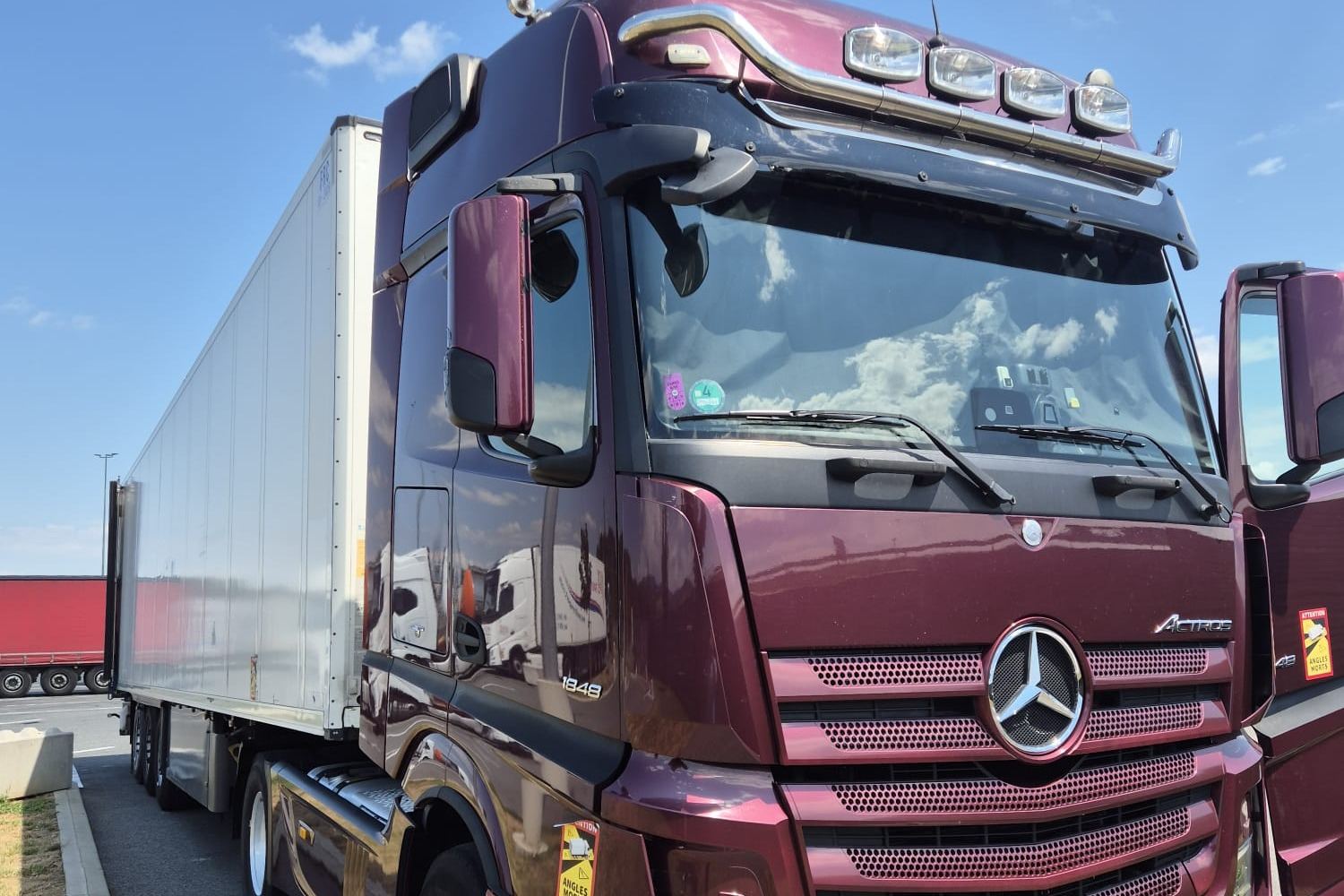
- ATP class FRC vehicle — guaranteed from +12 °C to −20 °C. What that means →
- Two-driver crew — no daily rest stop on the long legs. Times by leg →
- No transhipment — what we load, we unload, with the same vehicle.
- Liability under CMR — 8.33 SDR per kilogram; for higher-value goods we can agree a declared value under Article 24.
General cargo too
We also carry goods that need no cooling. The truck runs this corridor anyway — and for plenty of dry freight a closed reefer trailer is a better box than a curtainsider: sealed, insulated, food-grade clean, and it cannot be slashed open.
Suited to cargo that must stay dry and dust-free, and to loads where security matters. In the form, choose “No cooling — general cargo”.
Refrigerated transport remains our main business. We take general cargo when it fits the schedule on the lane — so tell us the date early.
When general freight is standing still
France bans vehicles over 7.5 tonnes from the road between Saturday 22:00 and Sunday 22:00. Croatia restricts traffic on its coastal roads at weekends between 15 June and 15 September. Perishable foodstuffs are exempt from both restrictions.
That means your goods often travel at exactly the times when general freight is halted — with the right vehicle and the correct paperwork.
The exemptions apply to specific categories of goods and only where the conditions are met. We check whether your load qualifies before confirming the job — we do not promise it in advance.
Frequently asked questions
How do you know what temperature my goods need?
For frozen and chilled goods the temperatures are prescribed by the ATP agreement. For fresh produce there is no prescribed value, so we follow industry good practice and agree the setting in advance. If you are not sure, select “I don’t know” in the form and describe the goods.
Why do you ask what the goods are and not just the temperature?
Because temperature alone does not tell us enough. Tomatoes, cucumbers and courgettes from Almería or Murcia are damaged at 0–2 °C even though they are fresh produce — they need +10 to +13 °C. Going by “fresh” alone would destroy the load.
Do you run at weekends, when driving bans apply?
In France, perishable foodstuffs are permanently exempt from the ban on vehicles over 7.5 tonnes between Saturday 22:00 and Sunday 22:00. In Croatia they are exempt from the summer coastal restriction between 15 June and 15 September. With the right vehicle and the right paperwork the load keeps moving when general freight is standing still.